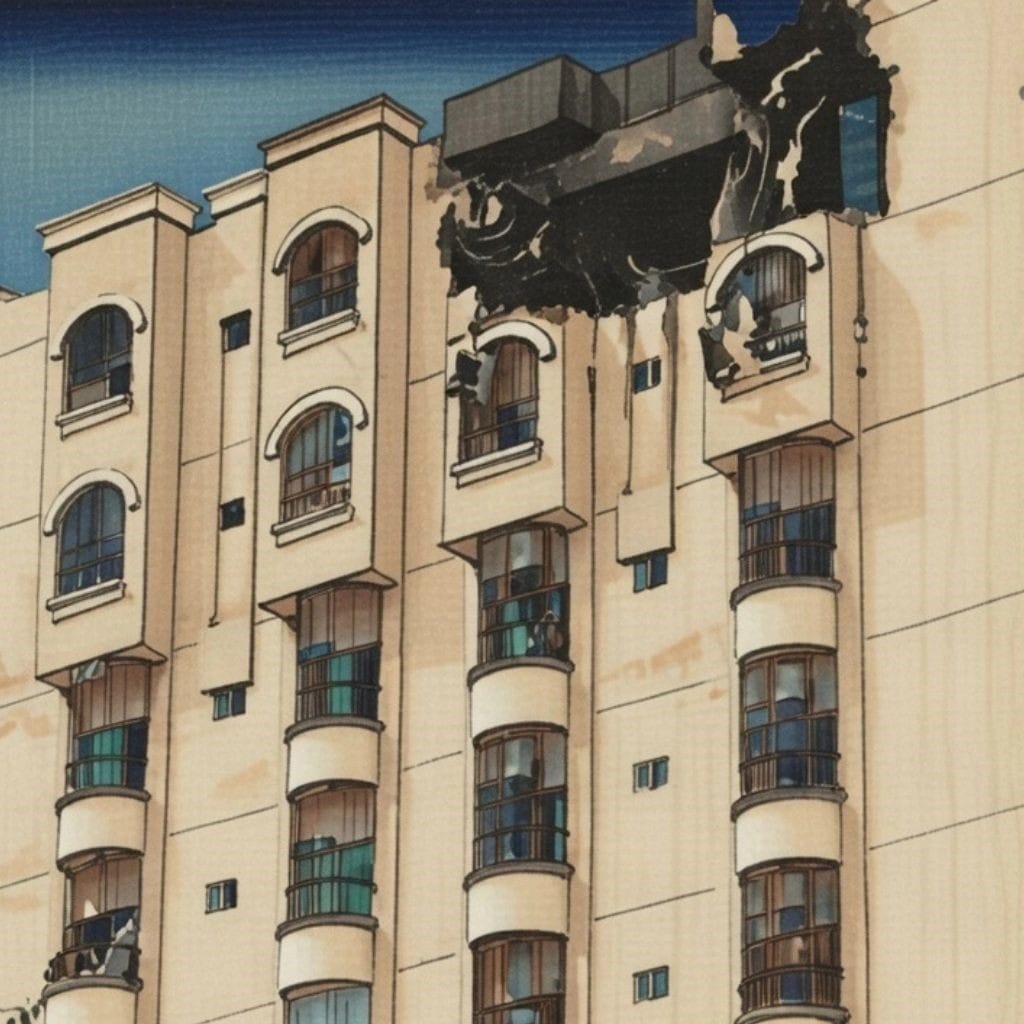
In the early hours of February 22, 2026, a powerful explosion rocked a residential building in Karachi’s North Nazimabad, around 5:40 AM during Sehri preparations for Ramazan. The blast, attributed to a gas cylinder, claimed the life of a 15-year-old boy and injured at least four others, including a woman and a child, with flames engulfing two adjacent flats on the upper floor. The impact was so intense that the explosion’s sound reverberated across the city, reportedly audible as far as Malir (approximately 19-25 km away) causing widespread panic among residents. Rescue teams swiftly responded, extinguishing the fire after an hour-long effort and evacuating survivors, while police initiated an investigation into the incident. Structural damage was evident, with charred interiors and debris scattered, highlighting the vulnerability of high-rise apartments in densely populated urban areas.
While initial reports point to a liquefied petroleum gas (LPG) cylinder as the culprit, the extraordinary loudness and reach of the blast raise questions about whether a standard domestic cylinder or a gas suction compressor or pressure-boosting machine commonly used in households facing low gas supply alone could produce such force, potentially indicating involvement of additional factors. In Pakistan, defective cylinders and unregulated handling contribute significantly to explosions, with a retrospective analysis of incidents from 2015-2025 identifying poor maintenance, overfilling, and weak enforcement of safety standards as key causes, often amplifying blast intensity beyond typical levels.
Simulations of natural gas leaks in confined spaces, such as apartments, show that ignition in areas with accumulated gas can lead to stratified explosions with high overpressure, especially if obstacles like furniture reflect shockwaves, explaining the extensive auditory impact and structural damage observed. Authorities have not ruled out these alternatives, and forensic evidence collection is underway to confirm if illegal modifications or substandard equipment played a role
One study found that a full LPG leak can create a deadly and explosive zone extending roughly 15 meters from the cylinder, making strict safety controls essential. It’s plausible that a domestic LPG cylinder explosion caused significant noise audible 19 km away while resulting in only one fatality and a few injuries. The blast’s destructive force is typically localized within 15 meters for a small cylinder, often confined to the room or flat, allowing quick evacuation of others in the building. In this incident, the explosion occurred on the 10th floor during early morning preparations, affecting mainly two adjacent flats with fire and debris. Rescue teams evacuated all other residents safely, and the single death (a 15-year-old) along with 4-5 injuries (mostly burns) aligns with victims being in or near the epicenter, while others escaped unharmed. Larger-scale LPG events (like tankers) can cause widespread casualties, but this smaller-scale domestic blast doesn’t inherently demand more deaths unless the entire household was clustered at the source.
Karachi’s persistent gas shortages have exacerbated reliance on hazardous alternatives, with the Sui Southern Gas Company reporting a 10% annual decline in national reserves, leading to widened demand-supply gaps and frequent load-shedding. Historically, the city enjoyed round-the-clock supply year-round, but recent winters limit availability to peak hours, while summers see cutoffs after 9 PM in many areas, forcing residents to adopt LPG cylinders or compressors despite risks. According to the Pakistan Institute of Development Economics, inefficient resource allocation and a shortfall of up to 45 million cubic feet per day from key fields have driven this crisis, compounded by circular debt exceeding Rs3.28 trillion in the gas sector.
One possible reason of the blast could be the dwellers negligently forgot to close the gas stove when the gas supply was cut. Once the gas restored it spread in the house and when they light the stove the blast occur. Investigation will tell the real reason behind it.
Despite Pakistan’s substantial domestic reserves and imports from Qatar, urban dwellers in high-tax contributing cities like Karachi often prioritize daily survival over advocacy, adapting through makeshift solutions rather than demanding systemic reforms from regulators like the Oil and Gas Regulatory Authority.