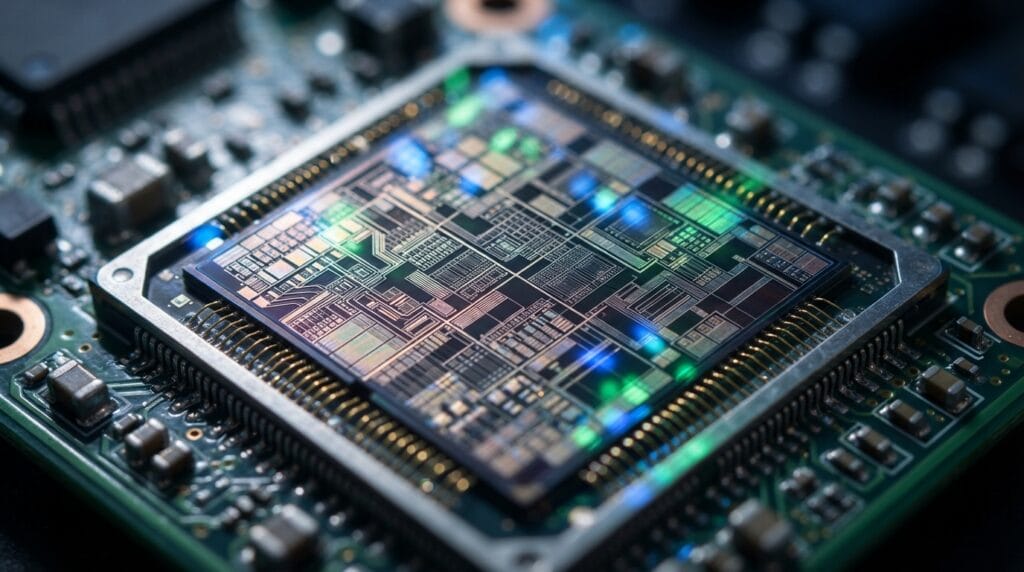
The semiconductor is the fourth-largest traded product in the world. All electronic devices are operating using semiconductor chips, from consumer goods to industrial equipment to military weapons to artificial intelligence. The digital economy entirely depends on the semiconductors, without which digitization would halt. The global semiconductor industry’s compound growth rate between 1990 and 2020 is 7.5%, which is higher than the global gross domestic product in the same period, which is 5%.
Moreover, these semiconductor chips power the cores of all major tech companies, including Nvidia’s GPUs. Google’s TPUs, AMD GPUs, and AI chips for Microsoft, Amazon, and Tesla. The present-day AI would not operate without these extremely specialized chips. This shows the importance of semiconductors for consumers and the world.
As important as semiconductors are for the world, so as complex its supply chain is. Designing and manufacturing semiconductor chips requires strong coordination among different countries. The complexity and strong coordination required for the semiconductor industry to operate also leave various vulnerabilities.
The Semiconductor Chip Industry: An Oligopoly or Monopoly?
There are two types of companies in the global semiconductor industry. First, there are fabless chip manufacturers that only design chips. NVIDIA, AMD, and Qualcomm, all companies within the US, are fabless companies. Fabless companies focus more on research and development, or R&D. These companies spend 25% of their earnings on R&D.
Second, there are foundries that only manufacture chips designed by fabless companies. Intel, Samsung, and Taiwan Semiconductor Manufacturing Company or TSMC, are the only three foundries in the world. This appears to be an oligopoly; in reality, it is not. Intel was once a leader in chip manufacturing, but it failed to produce seven-nanometer or even ten-nanometer chips. Samsung has the capability to produce three-nanometer chips with quite inferior production and lower in volumes/yields compared to TSMC. This only leaves TSMC in the industry.
TSMC is the only company in the world that produces three nanometer chips with great precision and in volumes to meet global needs. But how did TSMC achieve such dominance? Foundries are capital-intensive companies as they require exorbitant upfront and ongoing capital. In 2021, TSMC planned to invest $100 billion to extend its production, justified by its extensive level of production. TSMC has partnerships in the semiconductor industry supply chain with software companies, equipment manufacturers, and chip designers known as the Grand Alliance. TSMC supported these companies to improve their products, which eventually strengthened TSMC’s foundry ecosystem. Thus, most capable engineers, state-of the-art facilities, advanced equipment, economies of scale, unmatched specialization, and network effects make TSMC the most important company in the world.
From economics perspective, the companies that design products (pre-production) take the most profit compared to production companies. In the semiconductor industry, this is less true. Fabless companies generates 56% profit while foundries take 46% profit. This is not a significant difference compared to other industries like food, where producers make little profit.
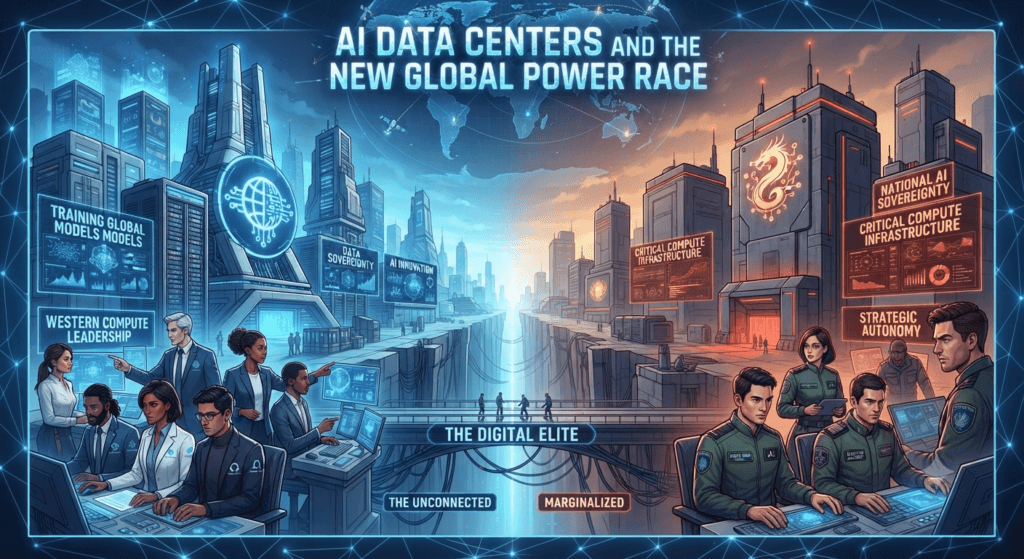
The semiconductor industry exemplifies the principle of comparative advantage. Countries specialize in producing things in which they are most efficient. For example, the US has the largest market share in semiconductor design and IP, accounting for 74%. Taiwan is the leading manufacturer of high-level technology chips, accounting for 90% of the global market. Japan/Netherlands produce equipment for making integrated circuits. This global structure allows for innovation, reduces costs, and drives economic growth.
Supply Chain Weaponization
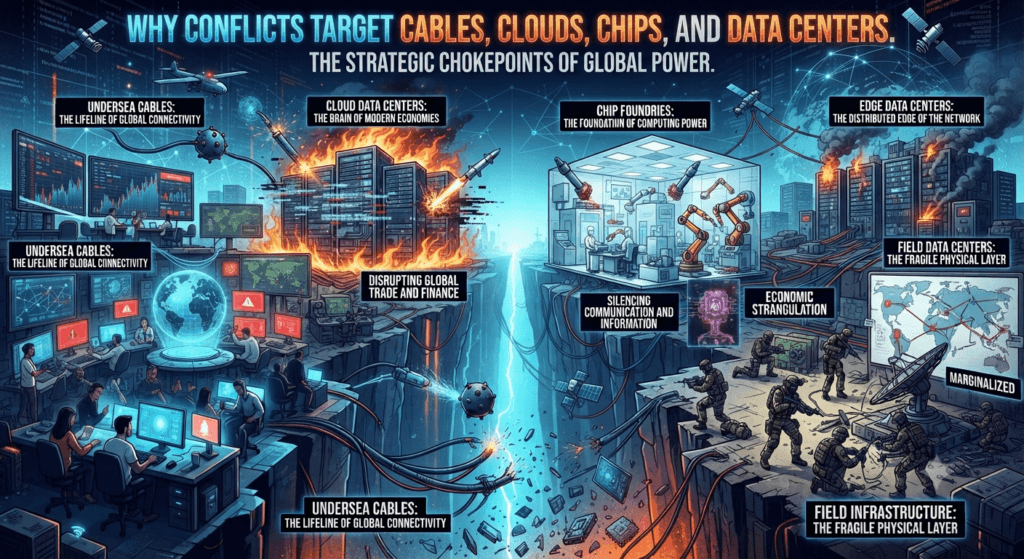
Weaponization is the process of making something suitable for use as a weapon. There are three chokepoints/vulnerabilities in the global supply chain of the semiconductor industry. The US government sanctions the export of cutting-edge semiconductor technology to China due to security reasons (prevent the use of chips in weapons of mass destruction) and surveillance for human rights abuses.
TSMC is the second chokepoint in China. The foundry manufactures about 90% of advanced nodes and 50% of all semiconductors worldwide. TSMC plays a significant role in the Chinese semiconductor sector. However, if the US enforces its control, it can handicap China’s AI capabilities.
The third chokepoint is the location of foundries. The US government passed legislation Chips and Science Act 2022, under which it invited Foundries (TSMC and Samsung) to set up manufacturing facilities in the US under a $52 billion subsidy package. However, these subsidies will only be received if TSMC and Samsung stop producing cutting-edge semiconductors for China. This will reduce the US dependence on the Asian foundries, like TSMC, yet they can only produce only 5% or less of TSMC’s current output. Moreover, TSMC will not bring advanced technology to produce chips in the US, and such cutting-edge technology will remain in Taiwan.
TSMC and the World
Taiwan has very low proximity to China. Any conflict between the two countries will give China a way to enter Taiwan. However, this is not easy for China because Taiwan has strong international backings of the US. Even with the US support, only Taiwan knows the art of producing cutting edge chips. Any escalation of conflict means that the art and technology will remain with Taiwan (or be destroyed with Taiwan). Neither China nor the world will get any advanced semiconductor chips, crippling AI and other applications.
Instead of going to war, China has some crucial cards, like rare earth minerals which are crucial in equipment that produce semiconductor chips. Restrictions of rear earth will help China to get what it wants. TSMC has some manufacturing operations in the US (Arizona) and Japan (Kumamoto) by the end of 2025. TSMC relocation strategy reduces its dependency on Taiwan and, therefore, increases its manufacturing footprint. However, key technology will remain in Taiwan.
Taiwan has already initiated using the semiconductor supply chain to advance its foreign policy. Taiwan placed an export ban on South Africa in 2025, which is considered an example of Taiwan’s use of semiconductor supply chain leverage to further its foreign policy goals through coercive diplomacy. TSMC is a critical element in Taiwan’s ability to create a “silicon shield,” whereby using the threat of global fallout from a disruption of TSMC.
The Russia-Ukraine conflict pushes Russia to achieve self-sufficiency. Russia is the world’s largest supplier of neon (44%) and as a significant producer of palladium, leading to possible interruptions to the supply chains of US-aligned countries. Alternatives will increase the cost of production.
Conclusion
The supply chain of semiconductor industry is complex. The dominance of the US in intellectual property rights and Taiwan in manufacturing is a problem for nations who are not allies of either countries. This dominance is weaponized and could be done with other nations. As Taiwan and the US protects their sides, so other nations like Russia are playing their cards by restricting supply of inputs while China restricting exports of rear earth minerals hoping to settle things without a stick.