

How Undersea Internet Cables Actually Work
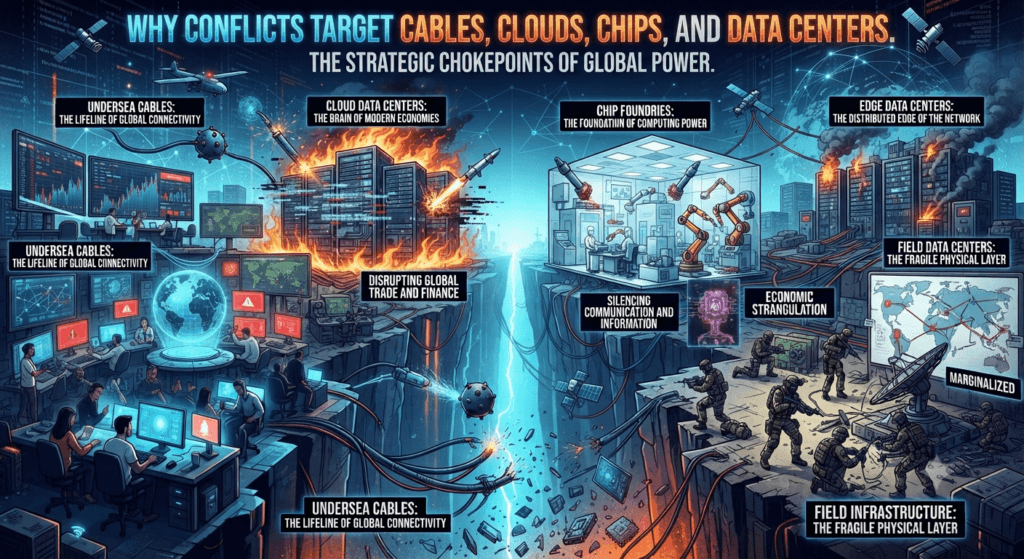
Most people picture satellites when they think about how countries stay connected online, but the reality is different. Around ninety five percent of international data, including emails, video calls, and financial transactions, travels through cables laid across the ocean floor.
Table of Contents
The Physical Structure
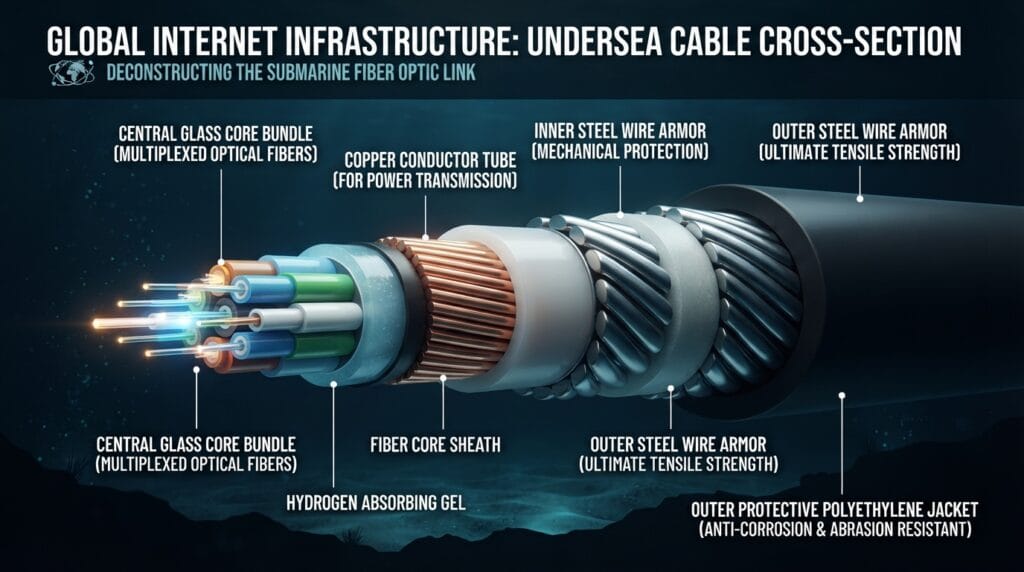
A single undersea cable is thinner than a garden hose, yet it is built to survive extreme pressure, saltwater corrosion, and shifting seabeds. Layers of steel wire, copper, and waterproof insulation protect a core of glass fibers that carry data as pulses of light.
Specialized ships lay these cables along carefully mapped routes, often burying them under the seabed near coastlines where fishing and anchoring pose the greatest risk of damage.
Did You Know?
Undersea cables are thinner than a garden hose but contain layers of steel, copper, and waterproof insulation protecting glass fibers that transmit data as pulses of light across oceans.
Why Redundancy Matters
No single cable carries all the traffic between two regions. Multiple cables typically connect the same countries so that if one is damaged, traffic reroutes automatically through others. This redundancy keeps global communication running even after cable faults, which happen more often than most people realize due to fishing equipment and natural seabed movement.
Repair ships are stationed around the world specifically to locate and fix breaks, a process that can take days to weeks depending on the cable's depth and location.
Key Takeaway
Undersea cable networks are built with redundancy, meaning multiple cables connect the same regions. If one cable is damaged, internet traffic automatically reroutes through others, keeping global communication running.
The Growing Importance of This Infrastructure
As more services move online, from banking to healthcare records, the reliability of this hidden infrastructure becomes more important every year. Governments and private companies continue to invest in new cable routes to add capacity and reduce the risk of regional outages.
Related Reading
Explore more analysis on global infrastructure and technology:
- The rise of data centers — How data centers are reshaping the digital economy
- How AI is transforming everyday industries — The role of AI in modern business and infrastructure
Explore More Infrastructure & Technology Analysis
For more research-driven analysis on global infrastructure, technology, and connectivity, explore the Tech & AI and World categories on BareBlogs.
Posted by: BareBlogs Editorial Team
Category: Tech & AI World
External Reference: International Cable Protection Committee