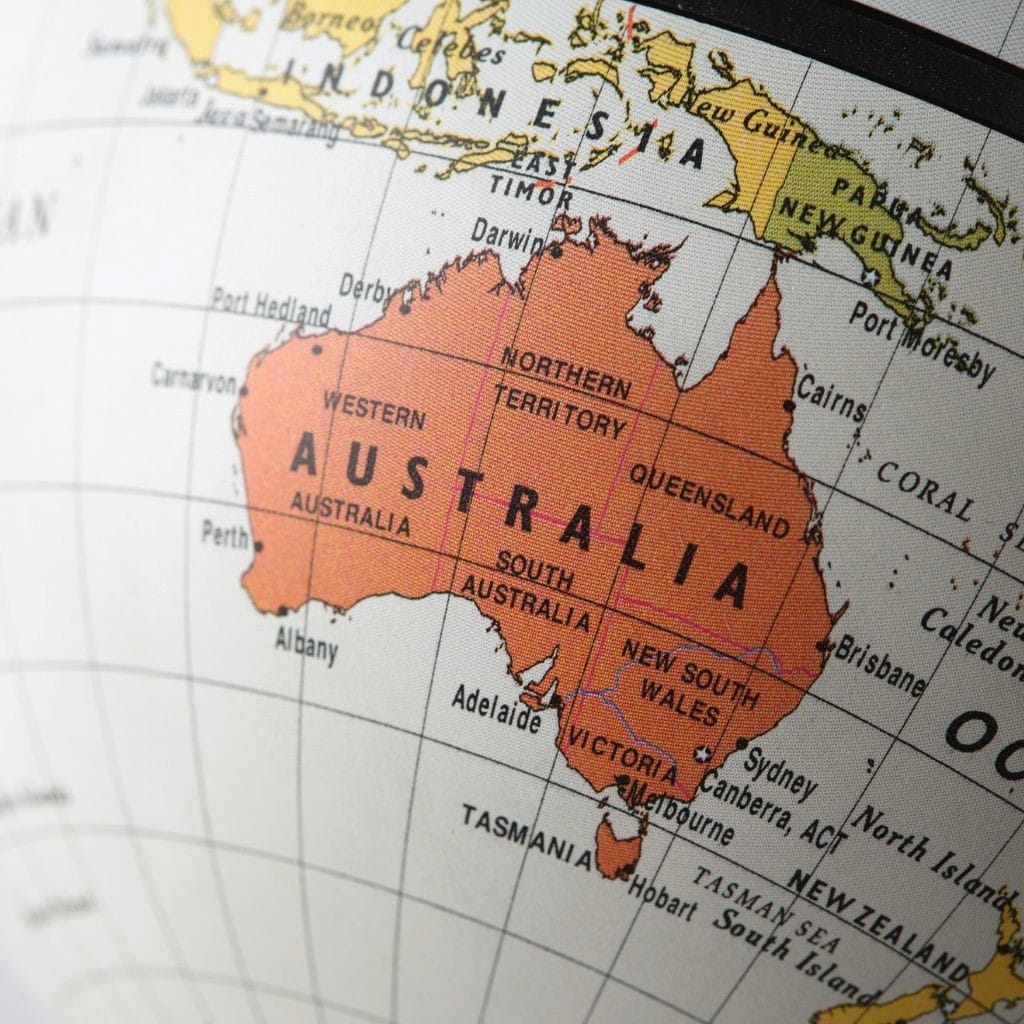
Australia is Mars on Earth, very wide, but the only difference is that our Oceania country is slightly habitable. Australia is the sixth largest country in the world, with an approximate area of 7.69 million square kilometers, falling behind Russia, Canada, China, the US, and Brazil. Even with this huge area, Australia has a modest population of 27.6 million as per the June 2025 data from the Australian Bureau of Statistics. This makes it one of the least densely populated countries globally, with an average of 3.5 people per square kilometer, causing a mismatch between its geographical vastness and human habitation.
A key factor behind this low population is the harsh environmental conditions of Australia. Outback or Vast swathes are the parts of Australia that have arid deserts with very high temperatures, water scarcity, and poor soil quality, making these areas mostly uninhabitable for mass settlement. Ecological studies that examine the correlation between human population density and biodiversity show that extreme environmental conditions push large clusters of population to reside near coastal areas. Therefore, more than 90% of Australians reside within 50 kilometers of the coastline, mostly living in urban centers along the eastern and southeastern seaboard.
This is evident in the distribution of population among major cities. Key population hubs include Sydney (New South Wales), Melbourne (Victoria), Brisbane (Queensland), Perth (Western Australia), Adelaide (South Australia), the Gold Coast (Queensland), Newcastle (New South Wales), and Canberra (Australian Capital Territory). These cities have a moderate climate and adequate economic opportunities in the financial, tourism, and mining sectors.
Western Australia demonstrates this trend as Australia’s largest state. However, its population has just crossed 3 million as of 2025. Around 80% of the population resides in the southwest corner, while 90% of the population, or 2.4 million people lives in the Perth metropolitan area. This uneven population distribution is evident in the second-largest state of Australia, Queensland. This state is roughly 7 times the size of the UK and 5 times the size of Japan. Despite this vast, enormous size, the Queensland population is 5.67 million as of June 2025. Residence is limited to just a number of cities, including Brisbane, Gold Coast, Sunshine Coast, Townsville, Cairns, Toowoomba, McKay, Rockhampton, Bundaberg, Hervey Bay, and Gladstone.
Most of Australia is uninhabitable due to intense aridity, extreme dryness, and average rainfall of < 470mm (the rainfall expected to decline in the near future). Expansive deserts cover 70-80% of the land, which raises the temperature to 50oC, producing infertile soils, and limiting drinking water. Geographic factors further worsen the situation, like cold ocean currents off the west coast that limit evaporation for rain clouds, whereas the Great Dividing Range leads to a rain shadow, obstructing moisture inland. Australia has low elevation and is isolated from the rest of the world, which affects biodiversity settlement.
Extreme heat, dryness, and low rainfall also make Australia vulnerable to bushfires. Long drought season dry vegetation that ignites easily when the temperature reaches to 50oC or above. As most of the population lives in coastal areas, this also limits detection and early intervention, as fire spreads over millions of square kilometers. Climatic changes increase the risk of bushfires, like the 2019-20 Black Summer fires that burned 18 million hectares, leading to thousands of displacements. These wildfires threaten biodiversity, infrastructure, and the coastal population.
Dry weather and lower rainfall in Australia also lead to water scarcity. Metropolitan areas are expected to receive average rainfall 500mm (some states will receive less than 500mm) and vast inland receives 250mm, insufficient to replenish aquifers, support habitation, and agriculture. Evaporation rates are also high due to extreme temperatures, which exhaust surface and groundwater. This is evident in the Murray-Darling Basin, in which runoff diminished extensively in droughts.
Population density in coastal cities and intensive irrigation in crucial basins like the Murray-Darling leads to higher water usage. Around 70% of water is consumed in agriculture, affecting supplies in low-rainfall areas. The Millennium Drought (2001-2009) is an example of this that reduced inflow by 40% and impacted food production and ecosystems. Climate change escalates these issues, influencing 9-15% runoff by 2030. As more extreme droughts occur and urban and industrial demand increases, water becomes scarce.
The saturation of urban centers creates significant obstacles for local governments, particularly when outside factors create extra difficulty. During the COVID-19 pandemic, for example, restrictions and disruptions at the national level resulted in an increase in domestic consumption of housing and other basic needs, especially within already high-density urban areas. The post-COVID period saw a spike in international students, rental prices and an increase in the demand of rental accommodation. To address this situation, the federal government capped the intake of international students at 270,000 for the year 2025, before adjusting it to 295,000 students, giving preference to students from Southeast Asia to control migration patterns and to begin to relieve the pressure on the availability of rental housing.
Despite this, the Reserve Bank of Australia and academics have demonstrated that international students only marginally impact the inflation of rental rates in Australia, contributing roughly 6% of total rentals nationally. The other segments of the market, such as construction delays and increasing domestic demand for rental property, are the primary causes of increasing rental real estate prices in Australia. However, these endeavors have a ripple effect on migration and result in slower population growth in highly saturated urban centers. It will potentially make Australia a less attractive choice for international students seeking an academic education opportunity.
Politicizing Minorities
Australia’s problem lies within its habitability and economic policies that increases domestic demand. It is time that Australia should focus on correcting internal things rather than restricting external demand.
For further reading, access our premium article “Why cutting international students is a problem for Australia?”