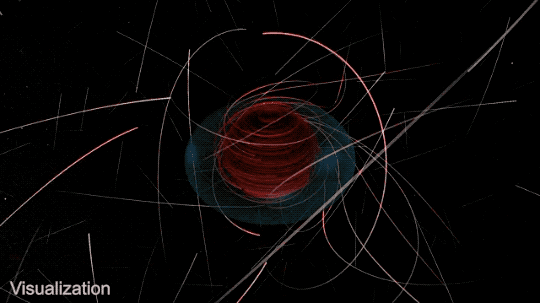


Assume that it is yearend and you have decided to relax at your home in vacations. You like to explore the universe with your telescope, so you are sitting on your roof, drinking coffee, and exploring the stars. Suddenly, you capture an unknown object, and you take its image. When you process the image with AI you came to know that it is Sagittarius A*.
When you closely look at the Sagittarius A* you will see light around it. You might think that what light it is. When you do some research and look at other images of black holes taken by NASA or researchers, you see light around all of them. But what this light is, as you know, gravity around black holes is so strong that even light can’t stay around and traps in them.
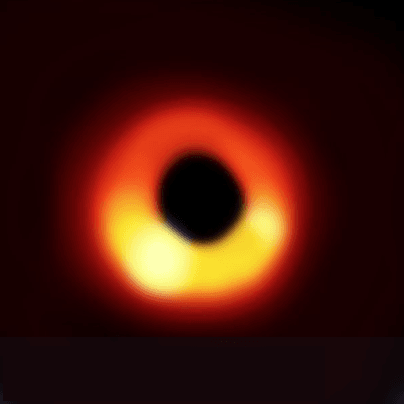
The light that you see in the above image is not from the black hole because it traps light. The light is from the accretion disk. This is another way scientists have found black holes by spotting their glowing accretion disks. Black holes move in orbit, they are very dense objects, and very violently orbiting. They heat up at an estimated temperature of up to 10 million oC or 18 million oF and emits light.
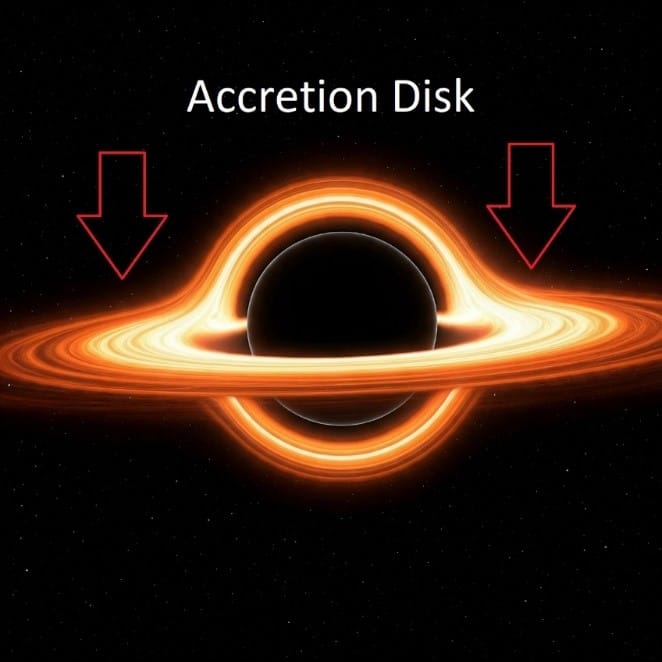
Why do we not see the accretion disk across the middle in Sagittarius A* in Image 1? It turns out that we are seeing Sagittarius A* from above. But if you see it from the edge on (Image 2), something very weird starts to happen. What we are seeing is actually the accretion disk in front of and behind the black hole (Image 2). As the black hole’s gravity is so immense, it’s causing light to be bent and distorted around it. So imagine this, a disk of material around any object, the light rays, let’s say, from an observer’s perspective from behind the black hole, go around into your eyes. Sometimes they orbit and then go into your eyes, and they go into your eyes from every point on the disk, from underneath, at the top, and behind. So you have light rays always going around a black hole.