In the quiet suburb of Marsden, Queensland, Australia, a 31-year-old Ahmed Raza Khan engaged in a self-sabotage act. Khan, who owns Lahore Restaurant in Marsden, intentionally set his restaurant on fire to claim insurance. This act caused more than $3 million in damage to surrounding shops. Authorities quickly overcame the fire, secured the shopping center in which the restaurant was located, and identified the cause of the fire through forensic investigation within a few months.
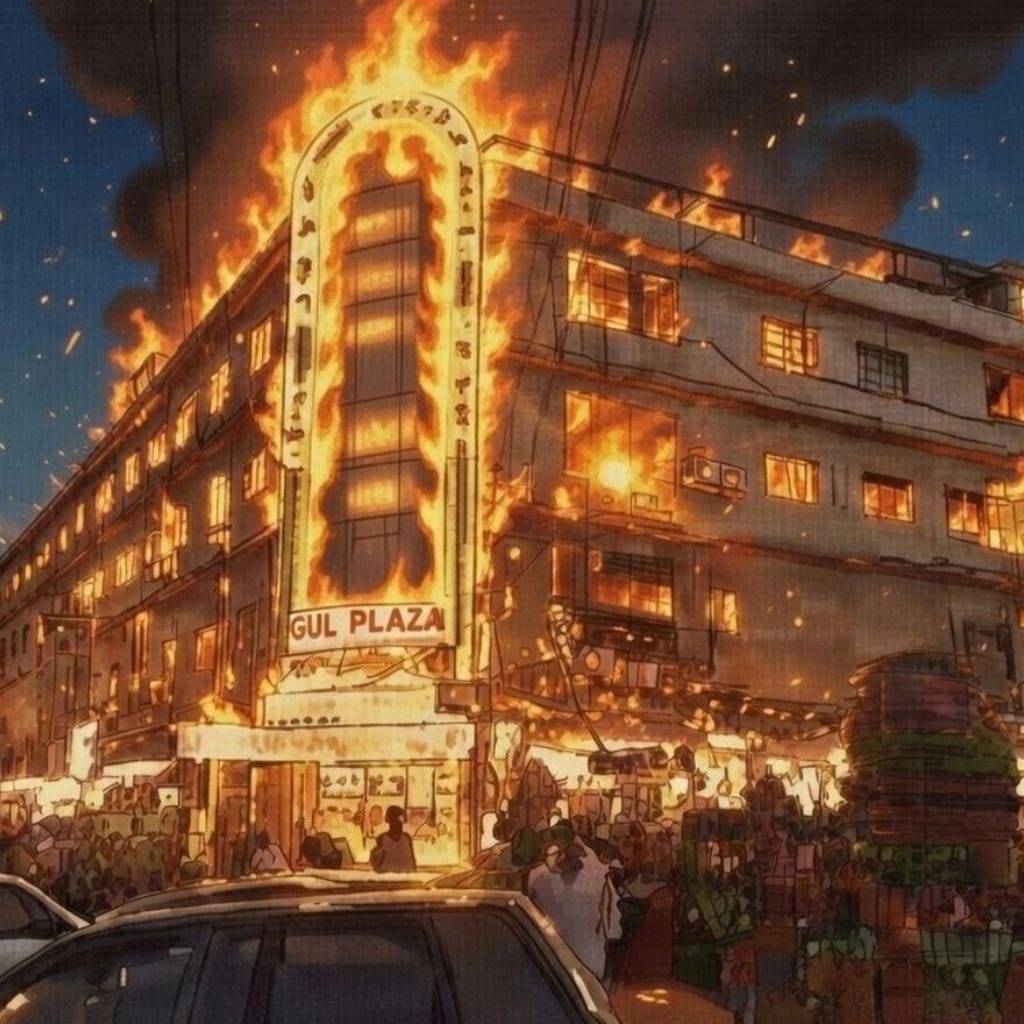
Unlike the Marsden fire, Karachi, Pakistan has recently experienced a far more devastating blaze at Gul Plaza. Since there are several failures in this occurrence, we will explore them at three levels: macro, meso, and micro. The article questions whether the incident is a result of the negligence of all stakeholders and simply an amplified extension of the “normal”.
Macro Level
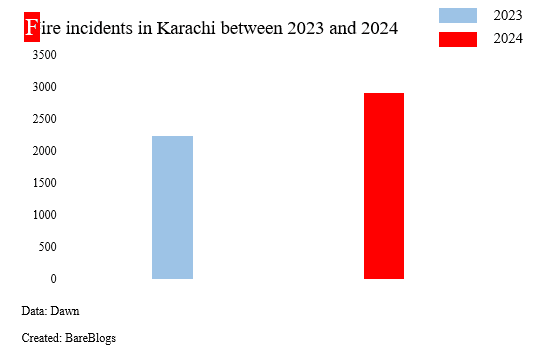
The corrupt system of Pakistan, notably the Sindh Government, causes significant levels of vulnerability for residential, commercial, and industrial buildings. While this article focuses on Gul Plaza, the past fire incidents cannot be ignored. For example, the fire incident of Baldia factory, RJ Mall, and Millennium Mall are the major ones (beside Gul Plaza) that caused many causalities and turn all these premises to ashes. In 2024, a conference held by the Fire Protection Association stated that Karachi has faced around 5,000 fire incidents in the last two years (2,228 in 2023 and 2,900 in 2024). The same conference reported that nearly 70% of the buildings are at risk due to a lack of compliance with the building codes.
Commercial buildings like shopping centers focus on profitability instead of improving the condition of the building or shop that generates the revenue. Political and economic power is concentrated among elite builders, traders’ associations (led by Tanveer Pasta), and corrupt officials in bodies like Sindh Building Control Authority or SBCA, enabling bribe-fueled approvals. For example, a revised plan for Gul Plaza’s third floor was submitted and approved in 1998 by the SBCA despite the expiry of the lease. The total number of approved shops in the plaza was 911, including basement 175, ground 355, 1st floor 188, and 2nd floor 193. The third floor has a controversial approval, adding another 191 shops, after which the total number of shops was 1,102. However, the fire incident affected 1,200 shops, which exposed illegal construction of unapproved 98 shops. Therefore, the focus is on maximizing shop space and the number of shops instead of investment in health and safety.
Moreover, the management, otherwise known as the committee of commercial or residential plazas, usually comprises members who have a stake in the building, such as owners of the shops. These members do not have the education or background to manage such commercial premises. For example, Tanveer Pasta President of Gul Plaza’s committee, does not have any experience or qualification in the management of commercial plazas.
When a crisis occurred, the head of the management committee did not have a plan to deal with it. The president of commercial plazas must have relevant qualification in risk management or health and safety. While the management committee of the plaza represents collectivism, which is the backbone of any commercial or industrial premise, it has little to no effect in mitigating incidents.
Together, the consequence of profit-making intent and the lower qualification of the management committee result in poor compliance. Despite government efforts to improve health and safety within the buildings, such as through fire surveys and making sprinkle system mandatory, resistance from building management is high to implement them. In 2023, the fire department surveyed more than 40 buildings and flagged inadequate equipment, blocked routes, faulty alarms, and poor lighting/training. In 2024, a follow-up marked Gul Plaza “unsatisfactory” in equipment access, alarms, and wiring. However, the government did not do any efforts for compliance implementation, such as impose seal the plaza or at least impose fines/penalties.
It also highlights the unregulated nature of operating businesses in commercial plazas. Lack of penalties/fines, or sealing the building encourage occupiers to continue to operate without any safety precautions. There are two major consequences of this. First, fire incidents like the Gul Plaza lead to high business failure. Second, such failures lead to significant capital loss (estimated loss at Gul Plaza is Rs100 billion).
There are also limited recourses to support owners and customers who died in the Gul Plaza incident. While the government has announced Rs10 million for families of deceased and for shop owners a Rs10 million interest-free loan, Rs500,000 for immediate expenses, and a temporary alternative place for business, these measures are short against the Rs100 billion estimated loss. Moreover, the shop owners have to bear the construction costs with an interest-free loan. With the existing business condition, including record-high electricity bills and lower buying power of customers, the compensation is not enough.
Meso
This part will explore the meso or organizational factors that have emerged or amplified due to Gul Plaza’s incident. In human relationship psychological and social contracts exist between parties. Rousseau’s work on psychological contract defined it as “an individual’s beliefs regarding the terms and conditions of a reciprocal exchange agreement … a promise has been made and a consideration offered in exchange for it”. Although such contracts exist between employer and employee, but can also exist between shop owners/tenants and the management committee of Gul Plaza. This principle is absent in the Gul Plaza incident. For instance, one shop owner informed that the management committee collected Rs1,200/month/shop (some sources reported Rs5,500/month/shop). When shop owners/tenants paid this amount, they expected or assumed that the management committee would provide basic necessities, including cleaning, security, and safety. However, safety does not exist at Gul Plaza, making the psychological or social contract questionable within the Islamic Republic.
The shop owners or tenants will get compensation, but it is again a small amount compared to their investment. The shop owners/tenants are not earning any revenue right now, so they will not be able to support their employees. This may lead to situations, like ‘furlough’, ‘stand down’, or more recently ‘business hibernation’. In this situation, it is difficult for the employers to pay anything to their employees (for a month or two) as they have limited resources left.
The safety culture within the Gul Plaza is not just absent; it is worse. Despite recent incidents of fire, the management did not take any precautions, such as installing fire extinguishers, clear fire exits, segregate chemical shops/go downs, or improve electric wiring. The previous two major incidents, including Millennium Mall and RJ Mall, were burnt down due to an electrical short circuit, but Gul Plaza management did not take any lessons from them. Even the President of Gul Plaza’s committee shutdown electricity, which prevents many people from coming out of the plaza. Had the safety culture been developed, this incident could have been prevented.
Many shop owners/tenants would now sell online if some of their inventory is rescued. This will generate some revenue to keep them along with employing some people, creating an additional channel, and creating a future for their business. However, these shop owners like the management committee led by Tanveer Pasta lacks qualification and experience, so they will face a hard time running an online business.
The fire safety department is also trying to calm the inferno. They do not have any training, plan, command center, or equipment in this emergency situation. For example, firefighters need to use positive-pressure fans as a first line of defense for ventilation. However, they used water, which made the fire worse, knowing that fire, due to a chemical or electrical short circuit, becomes worse with water. Even the fire brigade or Gul Plaza’s management committee does not have a loudspeaker to guide people with announcements.
Micro
The shop owners, their employees, and tenants earn their living from Gul Plaza, yet they failed to take care of it. The open electric wires outside their shops expose them to catastrophe. The shop owners or tenants are so naïve that they are unable to protect very shops that are their lifelong investment or offer them a living. Anecdotal evidence suggest some entity used isopropyl alcohol to spread the fire. Inventory of shops include flowers/pots, plastic materials, and apparel which spread the fire.
Many of the shop owners or tenants know how to run a business, but they lack health and safety knowledge. This lack of safety is evident in the missing safety culture and in the absence of a broader skeptic view. For example, the shop owners did not take any lessons from the recent fire case in the Millennium Mall. However, other major markets in Karachi did not take a lesson from Gul Plaza and started to protect open electric wires.
Most vulnerable are the shopkeepers who work on a minimum daily wage or a low monthly salary. These workers have low earnings due to their limited education and living on margins, and they will likely face cash-flow shortfalls as the incident abruptly ended their source of income with no savings. The workers are hit hard as many of their employers would not be able to pay them any wages/salary, or many would accommodate them for a month or two. Family members of deceased workers are also in a vulnerable position.
Conclusion
The Gul Plaza incident is indeed the negligence of all stakeholders including government, plaza’s management committee, shop owners, tenants, and workers. It amplifies the “normal” government, organizational, and individual-level issues. At the macro level, corruption and profit-driven policies normalize unsafe practices. At the meso level, absence of a safety culture and broken social contracts continue organizational failures. At the micro level, individual ignorance turns routine risks into catastrophes. The incident is not a once in a blue moon event but the norm, claiming 73 lives (still more deaths yet to confirm or might be underreported by the government and media) and Rs100 billion losses.