


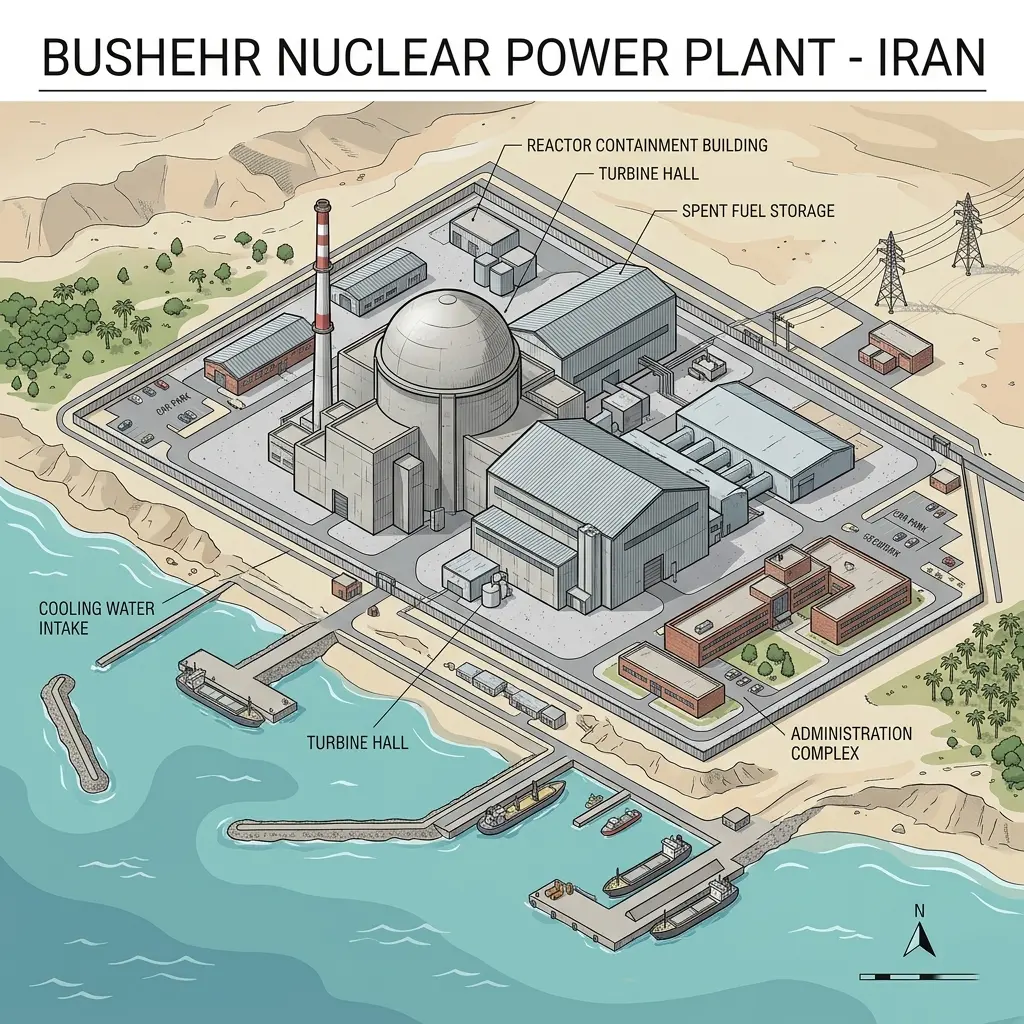
Iran’s Bushehr Facility: A Fragile Target
Updated as of Late July 2026
Table of Contents
Short Answer
Iran’s Bushehr nuclear plant has been struck by projectiles at least five separate times since the war with the US and Israel began, most recently in July 2026, when satellite images confirmed damage inside the complex for the first time. One person has been killed. Radiation levels have stayed normal throughout, and there’s no evidence the reactor core has been breached. But the pattern of repeated strikes has the IAEA warning that the region is edging toward what its chief calls nuclear safety’s “reddest line.”
Quick Summary
- Bushehr, Iran’s only operating nuclear power plant, sits on the Persian Gulf coast and was built with Russian assistance.
- The plant has been struck by projectiles on at least five occasions since February 2026, including a confirmed hit inside the complex in July.
- One security staff member was killed in an April 4 strike near the reactor’s perimeter fence.
- No increase in radiation has been recorded in any incident, and Iranian officials say the reactor continues operating normally.
- Independent modeling still shows a direct hit on the reactor core could contaminate Gulf drinking water for millions of people.
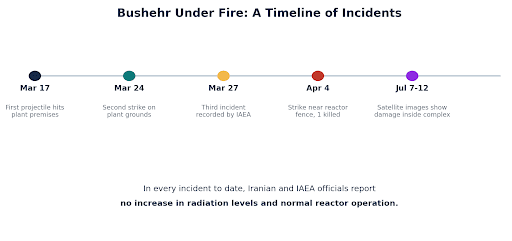
Figure 1: Confirmed strike incidents at Bushehr since the war began
Why Bushehr Is Considered So Dangerous a Target
Bushehr Nuclear Power Plant sits on the Persian Gulf coast roughly 17 kilometers southeast of Bushehr city. Its 1,000-megawatt reactor, built with Russian support, isn’t just an Iranian asset. Any serious damage to it would become a Gulf-wide problem almost immediately, regardless of how well-prepared neighboring governments are.
The IAEA has repeatedly flagged Bushehr as a facility where any serious attack could cause damage that simply can’t be undone. The plant holds a substantial inventory of nuclear material. Rosatom, the Russian state nuclear corporation, estimates the site holds 72 tonnes of active fuel and a further 210 tonnes of spent fuel on-site.
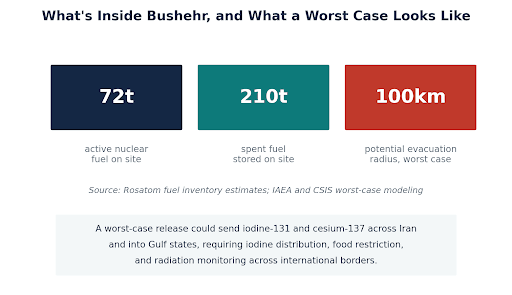
Figure 2: What’s stored at Bushehr, and the scale of a worst-case scenario
According to CSIS analysis, a direct strike, or even the loss of the plant’s two power lines, could trigger a core meltdown, releasing iodine-131 and cesium-137 across Iran and into nearby Gulf states. The IAEA’s worst-case modeling points to evacuation zones extending as far as 100 kilometers, potentially reaching population centers across several Gulf countries, alongside iodine distribution, food restrictions, and radiation monitoring across international borders.
Researchers using Science and Global Security’s spent-fuel fire models found that Kuwait City, Basra and Ahvaz face significant contamination risk, with modeled cesium-137 deposits exceeding 1.5 MBq per square meter under worst-case wind conditions.
What Has Actually Happened So Far
This is where the original risk assessment meets reality. Bushehr has not escaped this war unscathed, but the catastrophic scenario described above has not occurred, at least not yet.
- March 17, 2026: A projectile struck the plant’s premises for the first time. Iranian authorities reported no damage, no injuries, and normal reactor operation.
- March 24, 2026: A second strike hit the plant grounds at roughly 21:08 local time. Again, no damage or casualties were reported.
- March 27, 2026: A third incident was recorded and reported to the IAEA.
- April 4, 2026: A projectile struck near the reactor’s perimeter fence. One member of the site’s physical protection staff was killed by fragments, and a building was affected by shockwaves. Satellite analysis by the Institute for Science and International Security suggested the actual target was an anti-aircraft position just outside the plant, not the reactor itself.
- July 7-12, 2026: During renewed fighting, satellite imagery comparing July 7 and July 12 showed new impact scars inside the Bushehr complex itself, along with another apparent strike on nearby support facilities, the most serious confirmed damage to date.
Iran’s Foreign Minister Abbas Araghchi said in April that Bushehr had been “bombed” four times since the war began, and criticized what he called a lack of concern for nuclear safety from the US and Israel. Notably, US Central Command’s own list of July strike targets did not name Bushehr or any nuclear facility, and Bushehr’s deputy governor initially reported the plant’s perimeter had been struck before later denying the reactor itself was hit.
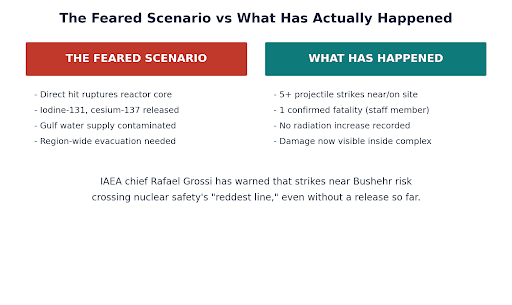
Figure 3: What was feared, next to what has been confirmed
IAEA Director General Rafael Grossi has responded to each incident with the same warning, repeated so often it has become the defining line of this story: any strike at or near an operating nuclear plant risks crossing what he calls the “reddest line” of nuclear safety, regardless of whether it causes a measurable release.
Why the Water Supply Risk Hasn’t Gone Away
The Persian Gulf isn’t just a body of water; it’s the primary source of drinking water for tens of millions of people. Qatar and Bahrain are entirely dependent on desalinated seawater. The UAE draws more than 80 percent of its supply from desalination, and Saudi Arabia roughly half.
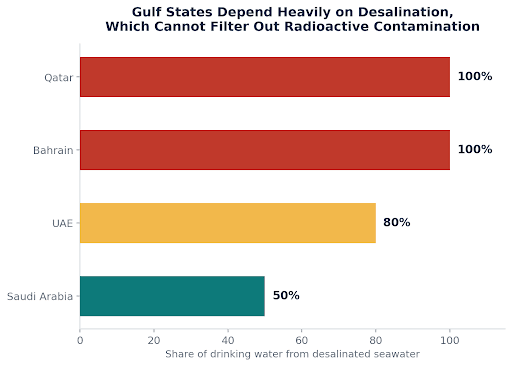
Figure 4: Gulf state reliance on desalinated seawater
Standard desalination plants aren’t built to filter out radioactive material. If Gulf waters were contaminated, those intakes would become unusable in short order, threatening drinking water and marine life alike. Qatar’s Prime Minister Sheikh Mohammed bin Abdulrahman Al Thani said in early 2025 that Qatar had already run simulations of a Bushehr attack scenario, and the results showed the country could run out of drinking water within three days.
The Gulf’s semi-enclosed geography makes this worse, not better. Contamination could persist in these waters for years or decades. The Bulletin of the Atomic Scientists notes that some desalination technologies can remove cesium and sodium, but not reliably at scale, and certainly not in an emergency.
A Site Already Under Structural Strain
Bushehr also sits in a seismically active zone, near the boundary between the Arabian and Eurasian tectonic plates. The nearby Zagros region regularly produces moderate to strong earthquakes.
The plant is designed to withstand a magnitude 8 earthquake without major damage, and survive up to magnitude 9. But the Bulletin of the Atomic Scientists points out that Bushehr’s construction history is unusually complicated. It was repeatedly bombed during the Iran-Iraq war in the 1980s, and eventually completed by Russian engineers working with specifications that weren’t originally compatible with the plant’s German-designed beginnings.
That history matters more now than it used to. Military strikes on nearby infrastructure, power grids, pipelines, and transport corridors could knock out backup cooling systems at exactly the moment an earthquake compromises the primary ones. Fukushima remains the cautionary example: that disaster began with the loss of backup power after a tsunami, not with damage to the reactor itself.
Frequently Asked Questions